| Atibt | maçaranduba |
| Other names | Maçaranduba, maparajuba (Brazil), balata rouge, balata franc, bois boulet (French Guyana), bulletwood, beefwood (Guyana), bolletrie, balata, horsemeat wood (Suriname). |
| Botanical name | Manilkara bidentata (A. DC.) A. Chev., M. amazonica Huber, M. huberi (Ducke) Standley., M. spec. various (= Mimusops spec. div.). |
| Family | Sapotaceae. |
| Growth area | Suriname, Guyanas, Brazil and Central America. |
| Tree description | Height 30-45 m. The straight cylindrical branch-free trunk is (15-)18-20(-25) m long and has a diameter of 0.6-0.8 m, maximum 1.8 m. Old trees have up to 1 .0 m high root tips. |
| Supply | Squared wood. |
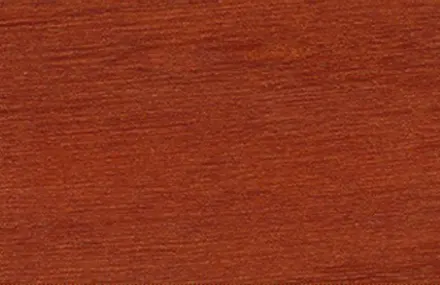
| Wood description | When fresh, the wood is flesh-colored, darkening to grayish red-brown, dark red-brown or sometimes purple-brown. The heartwood is clearly distinguishable from the 30-50 mm wide white to light brown sapwood. Without a noticeable odor or taste. |
| Wood type | hardwood |
| Wire | Straight, sometimes slightly wavy or slightly cross-haired. |
| Grain | Fine. |
| Voluminous mass | (850-)1050 (-1200) kg/m3 at 12% moisture content, fresh 1050-1350 kg/m3. |
| To work | Mediocre. |
| To dry | Very slow, with a strong tendency to deformation and surface and end cracks. |
| Editability | Despite its high density, it is fairly easy to machine. Massaranduba has a nice smooth finish. The fine dust can cause inflammation of the eyes and mucous membranes. |
| Nailing and screwing | Pre-drilling necessary. |
| Glue | Mediocre. |
| Bow | Would bend very well. |
| Surface finish | Good. |
| Sustainability | Fungi M. bidentata 1. M. huberi 2. M. amazonica 3. Termites moderately durable. |
| Strength class | Massaranduba is classified in strength class D60 according to NEN 5493; 2010 Quality guidelines for hardwood in hydraulic engineering works and other construction applications. |
| Impregnability | Heartwood 4. |
| Particularities | In Suriname, balata (which is better than rubber for some applications) is tapped from the tree. |
| Applications | Hydraulic constructions in pileworm-free areas, bridge decks, floors, sleepers and garden timber. Furthermore, for turning, knobs and handles, wind instruments, parquet and strip floors and for violin bows as a replacement for pernambuco and billiard cues. |
Webdesign & development by Bit Dynamics